
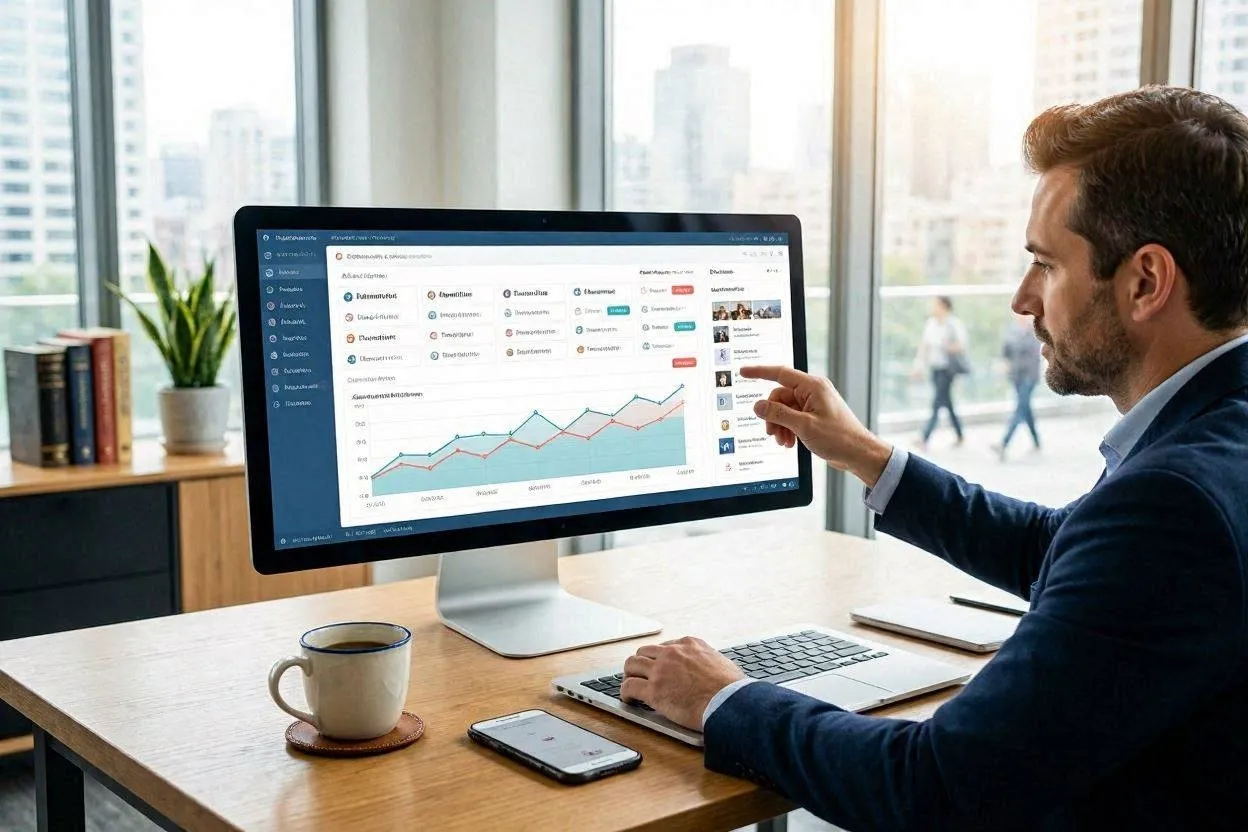
To track brand mentions in AI search, run your brand name as a test prompt in ChatGPT, Perplexity, Google AI Overviews, and Gemini — then log whether your brand appears, its position in the response, and how the AI describes it.
Most SEO and marketing teams still measure success through keyword rankings, organic click-through rate, and Google Search Console data — then stop there. That’s a critical gap in their web analytics setup. ChatGPT’s sources overlap with Google’s top search results by only 39%, according to Profound’s 2025 research. The other 61% of AI-generated answers pull from an entirely different set of websites. If your brand isn’t cited in that set, it simply doesn’t exist in AI search — no matter how strong your traditional SEO performance looks on your analytics dashboard.
This guide covers 5 methods to track brand mentions in AI search — from free manual testing to paid monitoring platforms — plus what to do when your brand is missing or misrepresented in AI-generated answers. Each method connects directly to measurable web stats and search marketing outcomes you can report on.
Each page must answer a specific search intent query completely — not partially. AI engines don’t split citations across 3 different pages for the same query. The single most comprehensive, well-structured page on a topic wins the citation. This is identical to how Google’s featured snippets work in traditional SEO.
Tactic 2 — Build Citation Coverage Across Third-Party Domains
Your own website citation share is one input. AI engines diversify sources across multiple domains to reduce dependence on any single website. A brand mentioned in G2 reviews, a Gartner Magic Quadrant, a TechCrunch article, and a Reddit product comparison thread is far more likely to appear in AI responses than a brand cited only on its own domain.
Target these 5 types of third-party citation sources:
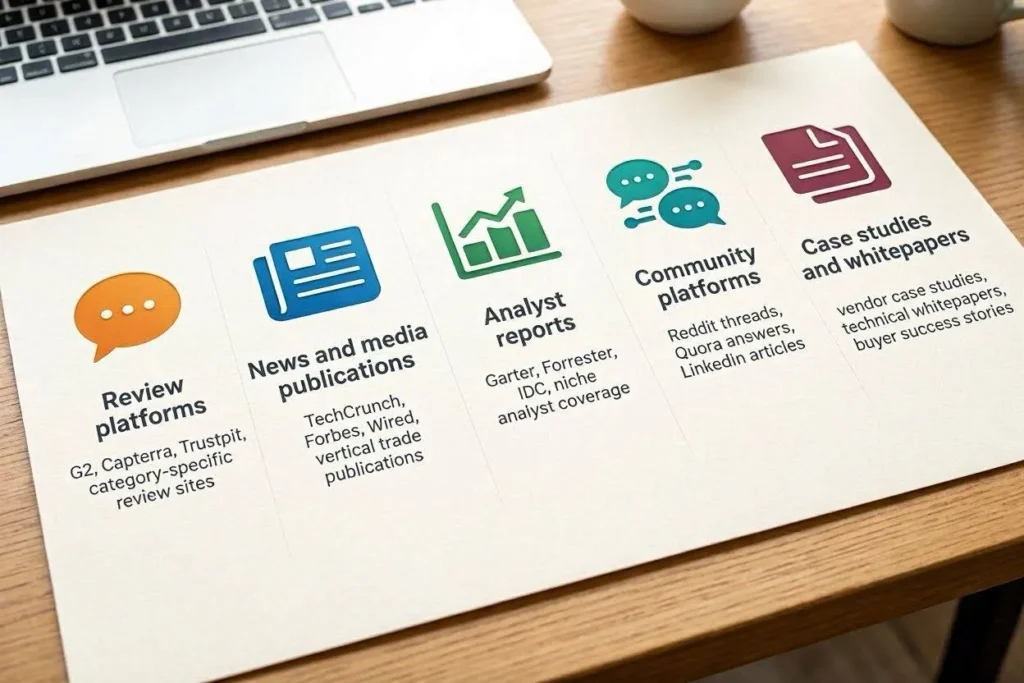
- Review platforms — G2, Capterra, Trustpilot, and category-specific review sites your buyers use
- News and media publications — TechCrunch, Forbes, Wired, and vertical trade publications that AI engines consistently cite in your category
- Analyst reports — Gartner, Forrester, IDC, and niche analyst coverage relevant to your product category
- Community platforms — Reddit threads, Quora answers, and LinkedIn articles where your brand appears in authentic, user-generated discussions
- Partner and integration listings — other software platforms, marketplaces, and ecosystem directories that reference your brand in their documentation
Each new citation on a trusted domain increases your citation share metric — the same metric that drives measurable referral traffic in your web analytics.
Tactic 3 — Increase Share of Voice Through Competitive Benchmarking
Track your SoV against 3-5 direct competitors every week as part of your standard marketing analytics reporting. When a competitor’s SoV increases week-over-week, investigate what content they published or what third-party coverage they earned in that period. Replicate the same channels and content formats with stronger, more current material.
SoV in AI search shifts faster than keyword ranking positions in traditional SEO. A single high-authority third-party mention can increase a competitor’s SoV by 5-10 percentage points within days of publication. Weekly competitive benchmarking catches these shifts while you still have time to respond.
Tactic 4 — Develop Topical Authority Over 90 Days
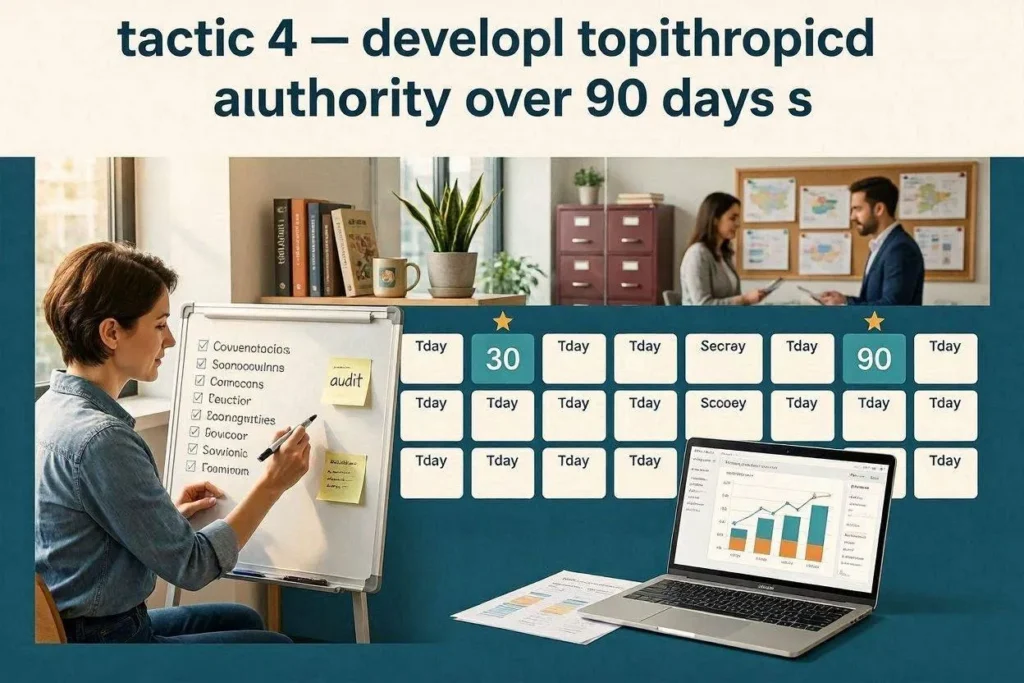
Generative Engine Optimization (GEO) and Answer Engine Optimization (AEO) both reward brands that cover a topic comprehensively across multiple interlinked pages — not one article, but a full content cluster of 10-20 pieces that address every angle of a subject.
Build your content cluster with one main pillar page covering the broad topic at a high level, and 8-12 supporting pages covering specific subtopics in depth. Internal links connect every supporting page back to the pillar. External citations from third-party domains reinforce the cluster’s domain authority in both traditional search ranking and AI search visibility metrics.
Topical authority takes 60-90 days to register measurable improvements in AI citation share. Track your mention rate monthly during this period — not weekly — to distinguish real trend movement from normal week-to-week data fluctuation in your analytics reports.
Conclusion
Track brand mentions in AI search by testing 10 prompts across 6 platforms each week, logging 5 metrics in your analytics dashboard, monitoring citation URLs, and building third-party coverage on the domains AI engines trust most.
Start with the free method today. Open ChatGPT and Perplexity. Run 5 queries using your brand’s main product category. Check whether your brand appears, what position it holds, and whether any competitor dominates the responses. That 10-minute audit reveals your AI search marketing gap immediately — no paid tool required.
The brands winning AI search visibility in 2026 are not the ones with the highest keyword rankings. They are the ones tracking, measuring, and optimizing for a new web analytics metric that most SEO teams haven’t added to their dashboards yet.