A backlink is a hyperlink on one website that points to a page on a different website. When Site A links to Site B, Google’s crawlers treat that link as a signal: a small vote that Site B’s page is worth citing. That single mechanism, repeated across billions of pages, is the backbone of how Google ranks content today.
Understanding how backlinks work matters because the concept sits underneath nearly every ranking conversation in SEO, yet most explanations skip the actual mechanics. This guide covers the crawl-to-ranking pipeline, the quality signals that separate a strong link from a wasted one, and the tactics that build a link profile without triggering a Google penalty.
What Are Backlinks?
A backlink is any hyperlink from an external domain that leads to your website. Site owners also call these “inbound links” or “incoming links.” The term exists in contrast to “outbound links,” the links you place on your own site pointing elsewhere.
Wikipedia offers a clean example. A nonprofit’s blog post might earn a citation link from a Wikipedia article on a related topic. That single link functions as an inbound link for the nonprofit and an outbound link for Wikipedia: the same hyperlink, but with opposite labels depending on which site you’re standing on.
Not every backlink carries equal weight. A link from a government health agency’s .gov domain signals something different to Google than a link buried in a random forum comment, even though both technically qualify as backlinks. What separates a link that helps rankings from one that does nothing (or actively hurts them) comes down to quality signals, which we’ll get to shortly.
How Do Backlinks Work?
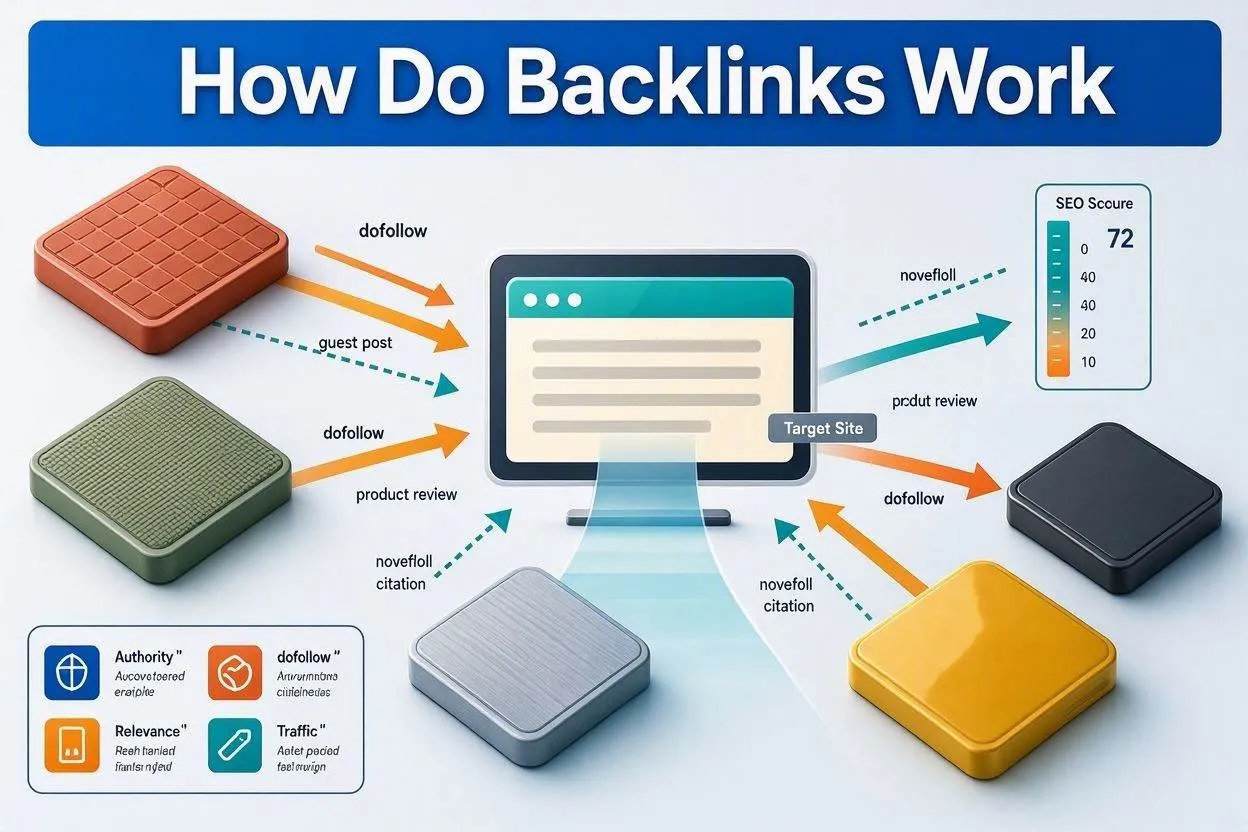
Backlinks work by acting as a trust signal that Google’s algorithm uses to evaluate a page’s authority and relevance, and that factors into ranking position. The process runs through a few connected systems.
- Crawling and discovery. Googlebot discovers new pages primarily by following links from pages it already knows about. If your site has zero backlinks, Googlebot has to find your URL through a sitemap submission or a direct crawl request, a slower and less reliable path than being linked from a page that’s already indexed. A backlink from an established site can cut discovery time from weeks to days.
- The link graph. Once Googlebot follows a link, that connection gets recorded in what engineers call the link graph, a massive map of which pages link to which other pages across the entire indexed web. Google’s original PageRank algorithm, published by Larry Page and Sergey Brin in 1998, used this graph to calculate a numerical authority score for every page based on the quantity and quality of pages linking to it. Modern ranking systems have moved well past the original PageRank formula, but the underlying logic survives: pages that earn links from other well-linked pages inherit some of that authority.
- Equity distribution. This transfer of authority goes by a few names (“link equity,” “link juice,” “ranking power”) and it doesn’t distribute evenly. A link from a page with a hundred other outbound links passes less equity per link than a link from a page with five outbound links, because Google treats each link as a fraction of that page’s total authority. Placement matters too. A contextual link embedded in the body of an article carries more weight than the same URL sitting in a site-wide footer, since footer links repeat on every page and read as templated rather than editorial.
- Anchor text. The clickable words wrapped around the link feed a separate but related signal. If a cooking blog links to a recipe site using the anchor text “best sourdough starter guide,” Google reads that phrase as a hint about what the destination page covers. Vague anchor text like “click here” transfers the link’s authority without transferring any topical context.
What Makes a Backlink High-Quality?
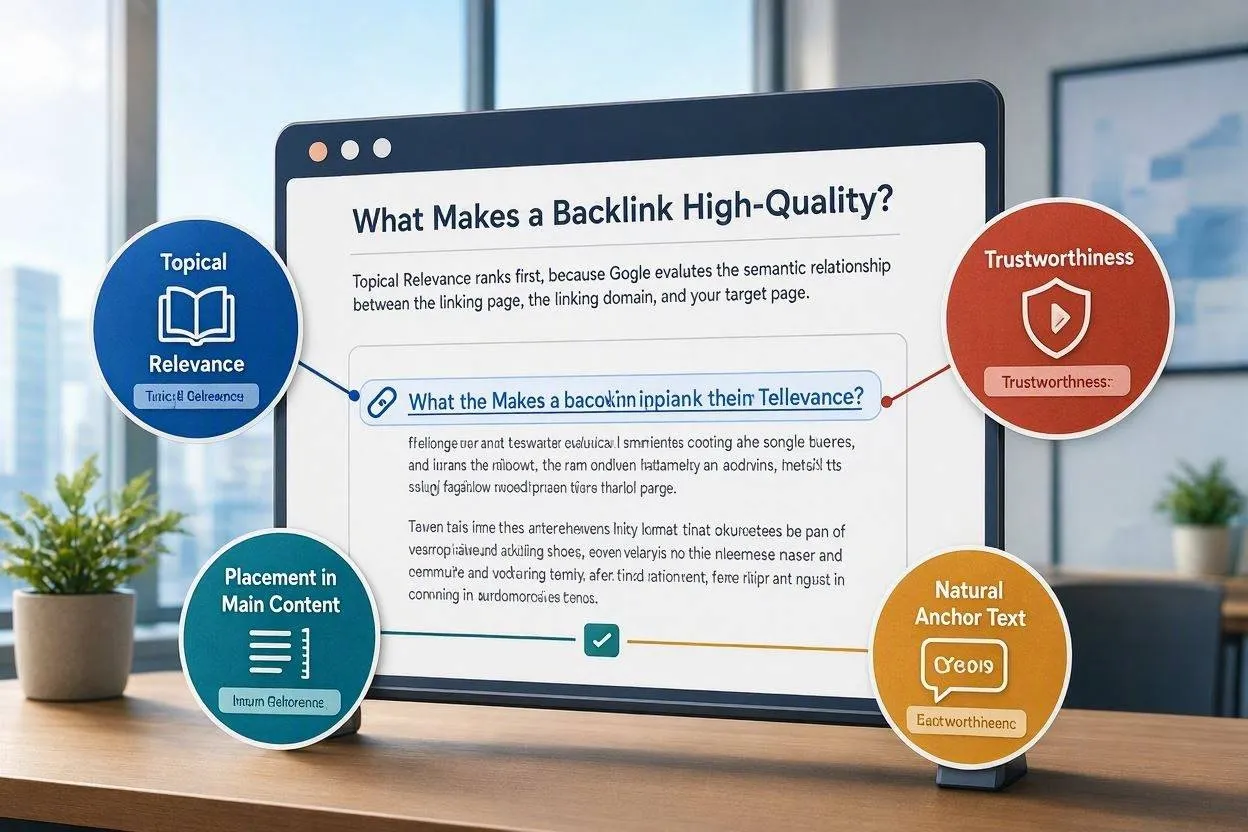
A high-quality backlink comes from a topically relevant, trustworthy domain, sits in the main content of the page, and uses natural anchor text. Four factors determine where a given link falls on the quality spectrum.
Topical Relevance
Topical relevance ranks first, because Google evaluates the semantic relationship between the linking page, the linking domain, and your target page. A link from a niche accounting blog to a tax-software company matters more for that company’s rankings than a link from a general entertainment site with ten times the traffic, simply because the accounting blog operates in the same topic cluster.
Domain Trust and Traffic
Domain trust and traffic come second. SEO tools estimate this trust using proprietary scores: Domain Authority (DA) from Moz, Domain Rating (DR) from Ahrefs, Authority Score from Semrush. Google publishes no official authority metric of its own, so these third-party scores function as approximations rather than ground truth. A domain that receives zero organic visitors raises a flag regardless of its DA or DR number. A site with no real readership usually exists for link placement, not genuine publishing.
Placement and Context
Placement and context rank third. A link woven into a paragraph that explains why the citation matters reads as editorial. The same URL dropped into a sidebar widget that appears on every page of the site reads as automated, and Google’s spam-detection systems weigh those two placements very differently.
Anchor Text Distribution
Anchor text distribution rounds out the list. A healthy backlink profile mixes branded anchors (“Ahrefs”), naked URLs, generic phrases (“read the full study”), and a smaller share of keyword-matched anchors. When more than half of a site’s inbound anchors use exact-match keywords, that pattern looks like manipulation rather than organic citation, and Google’s spam systems can flag it for review.
Why Do Backlinks Matter for SEO Rankings?
Backlinks matter because they’re one of the strongest signals Google uses to judge a page’s authority relative to competing pages on the same topic. Content quality and relevance decide whether a page can rank at all. Backlinks often decide where it lands once it’s in the running.
Two pages can target the same keyword with comparable on-page optimization, similar word counts, and matching search intent. If one page has earned links from 40 unique referring domains and the other has 4, the first page holds a structural advantage that on-page tweaks alone rarely close. Referring domains (the count of distinct websites linking to a page, as opposed to raw link volume) matter more than total link count, since ten links from one domain carry far less signal than one link each from ten different domains.
Backlinks also speed up discovery and indexing, feeding into what Google calls crawl budget, the number of pages Googlebot is willing and able to crawl on a given site within a set period. Sites that earn inbound links from frequently crawled, high-authority domains tend to get their new pages indexed faster, because Googlebot follows those inbound paths on its regular crawl cycles.
How Many Backlinks Does a Page Need to Rank?
Most pages that rank on page one of Google hold roughly 13 to 40 referring domains, though the exact number shifts by niche and competition level. Semrush’s ranking-factors research found that the median top-ranking page carries just 13 referring domains. Not hundreds. Not thousands.
That number should reset expectations for teams chasing volume. A page with 15 backlinks from topically relevant, moderately authoritative sites will typically outrank a page with 150 backlinks from low-quality directories and link farms. Competitive commercial keywords in finance, legal, or insurance often require 50 or more referring domains from strong sites, while a long-tail informational query in a smaller niche might rank with 5 to 10.
The right benchmark comes from studying the pages currently ranking for your target keyword, not from applying a universal number. Pull the referring domain count for the top five results, average it, and treat that figure as your working target. Adjust upward if your site’s overall domain trust sits below the competition’s.
What Are the Different Types of Backlinks?
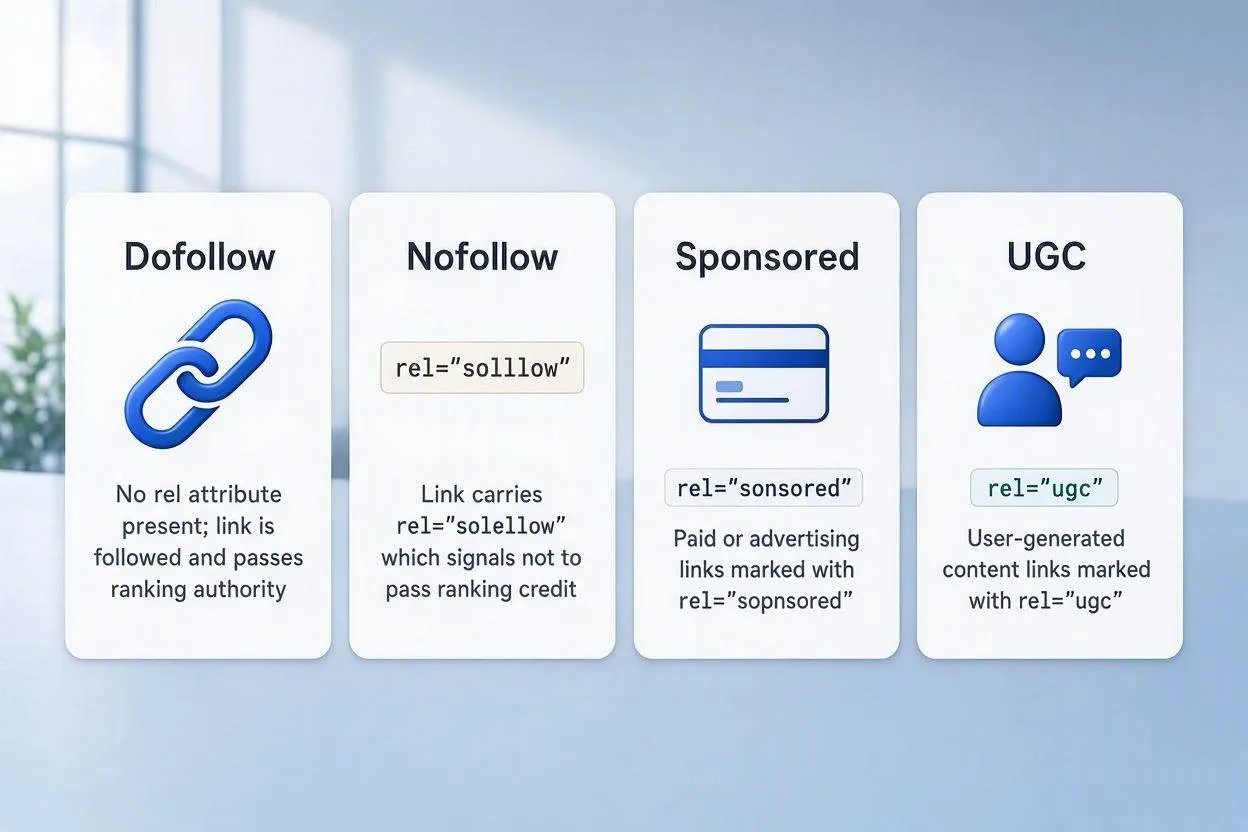
Backlinks fall into four main technical categories based on the HTML attribute attached to the link: dofollow, nofollow, sponsored, and UGC (user-generated content).
Dofollow
Dofollow links carry no restrictive attribute, meaning Googlebot follows the link and passes ranking authority to the destination page.
Nofollow
Nofollow links carry the rel=”nofollow” attribute, which tells Google not to pass ranking credit, though the link can still drive referral traffic and visibility.
Sponsored
Sponsored links carry the rel=”sponsored” attribute, required whenever payment, a product, or a service is exchanged for the placement.
UGC
UGC (user-generated content) links carry the rel=”ugc” attribute, applied to links generated in comment sections, forum posts, or other content users submit directly.
Beyond the technical attribute, links also split by acquisition method. Editorial links get added because an author genuinely found your content useful, a journalist citing your original research, for instance. Manual links result from deliberate outreach: guest posts, resource-page submissions, and broken-link replacements all fall here. Natural and manual links overlap in practice, since a well-promoted piece of content can attract editorial citations without any direct outreach at all.
How Do You Get Backlinks?
You get backlinks primarily through digital PR, guest posting, broken-link outreach, resource-page submissions, and brand-mention reclamation. Each method carries a different cost, timeline, and risk profile.
- Digital PR. Campaigns built around original data (a survey, a proprietary dataset, a freedom-of-information request) give journalists something citable. A single well-executed campaign can earn 20 to 50 followed links from high-authority news and trade sites within a two-week window, though production and outreach costs typically run into the thousands of dollars.
- Guest posting. Still works when the publication covers your exact niche and the article stands on its own value, independent of the link. A 1,200-word guest post placed on a relevant industry site functions as a legitimate citation. A 400-word filler piece submitted to a “write for us” page that accepts any topic reads as a paid placement in disguise, even when no money changes hands.
- Broken-link building. Replaces value for value. You find a page on an authoritative site that links to a dead URL, create or identify content that fills that gap, then flag the broken link to the site owner while suggesting your page as the fix. Response rates run noticeably higher than cold guest-post pitches, since the outreach solves a real problem instead of asking for a favor.
- Unlinked brand mentions. Convert existing goodwill into equity. If an author already named your company in an article without linking to it, a short note asking for the citation to become clickable often gets a fast yes, since the writer already knows and trusts your brand.
- Resource-page link building. Targets curated lists that industry blogs, universities, and associations maintain specifically to link out. An .edu resource page listing tools for a specific profession, for example, will often add a genuinely useful free tool or guide after a short pitch.
What Backlink Practices Does Google Penalize?
Google penalizes private blog networks, paid links without proper disclosure, systematic link exchanges, and keyword-stuffed anchor text patterns. These practices violate Google’s published link spam policies and expose a site to manual action or algorithmic demotion.
A private blog network (PBN) consists of multiple sites built specifically to funnel link equity toward one target domain. Google’s SpamBrain system, an AI-driven spam-detection tool, now identifies PBN footprints with high accuracy: shared hosting environments, matching site templates, and thin content with no organic traffic all trigger review. Paid links that skip the rel=”sponsored” attribute break the disclosure requirement outright, regardless of whether the linking site frames the placement as “editorial.”
Link exchanges present a subtler risk. A one-time reciprocal link between two genuinely related businesses rarely causes problems. A structured “I’ll link to you if you link to me” scheme run at scale, though, leaves a detectable pattern that Google’s documentation explicitly calls out as manipulation.
Here’s the practical test for any link opportunity: would this link exist without the SEO benefit attached to it? If a link would still make sense on editorial or reference grounds alone, it’s low-risk. If the link only exists because of a payment, a trade, or a bulk placement deal, the risk climbs no matter how the arrangement gets described.
How Do You Measure Whether Backlinks Are Working?
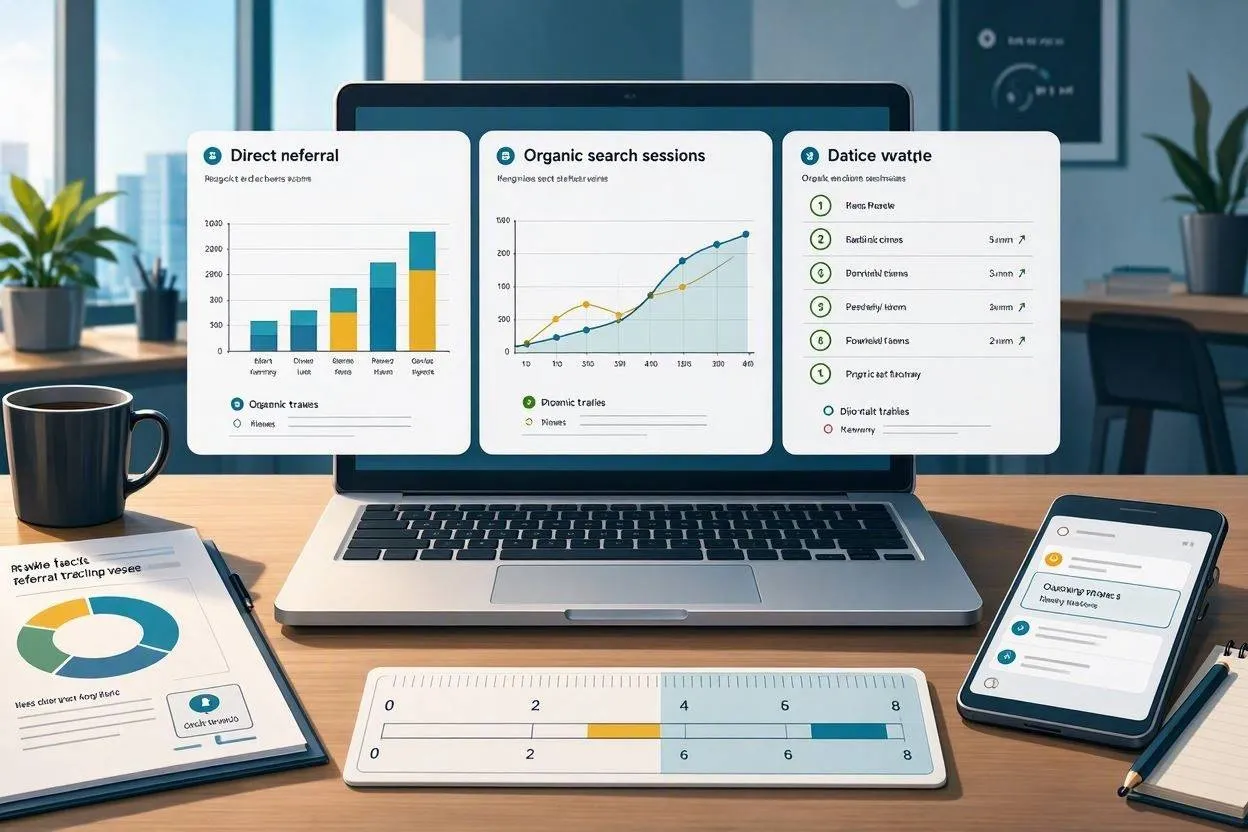
You measure backlink effectiveness by tracking referral traffic, organic search traffic, and keyword rankings over a 4-to-8-week window after link acquisition. Backlinks rarely produce instant results, so short observation periods tend to hide the real signal inside normal traffic noise.
Referral traffic shows whether people actually click the link, a metric independent of whether Google passes ranking credit. A backlink placed on a popular, well-trafficked article can send meaningful direct visitors even when it carries a nofollow attribute. Organic traffic growth tells a different story: an upward trend over 6 to 12 weeks, measured against the same period the previous month or quarter, suggests the new links are strengthening the page’s ranking position rather than just its visibility.
Backlink audits round out the measurement process. Running a periodic audit through a tool like Ahrefs, Semrush, or Google Search Console surfaces three categories of existing links: healthy links supporting rankings, neutral links doing nothing harmful, and toxic links worth disavowing. Google’s Disavow Tool exists inside Search Console specifically for that third category, though Google’s own guidance treats disavowal as a last resort. Most low-quality links get ignored automatically rather than actively penalized.
A site that adds 15 new referring domains over three months and sees organic traffic climb 20 to 30 percent across that same window has strong evidence the link-building work is paying off. A site that adds the same number of links with no traffic movement at all likely picked low-relevance or low-trust domains, and the fix starts with revisiting the quality signals covered earlier, not with acquiring more links at the same standard.
Conclusion
Backlinks work through a chain that starts with crawling, runs through the link graph, and ends with authority passed unevenly based on relevance, trust, and placement. A single link from a topically aligned, well-trusted domain does more for rankings than dozens of links from unrelated or low-quality sites. The median first-page result carries only about 13 referring domains, proof that the quality bar matters more than the counting exercise most teams default to.
Building a backlink profile that survives algorithm updates comes down to one repeatable test: would this link exist without the SEO upside attached to it? Links that pass that test compound in value. Links that don’t eventually get filtered out, disavowed, or penalized, and the sites that rely on them end up starting over from a weaker position than if they’d never built those links at all.