
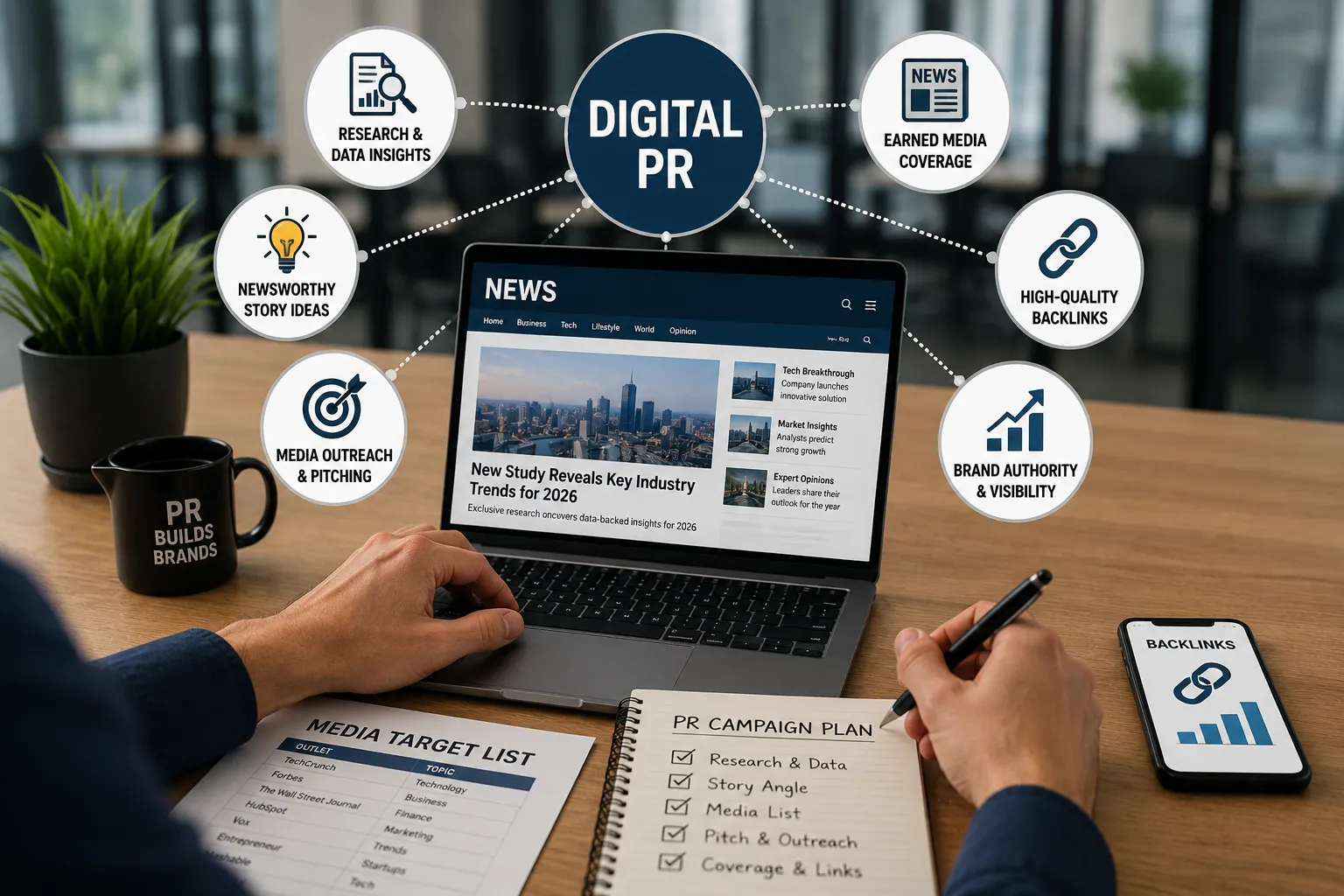
Public relations has never been more measurable. Digital PR link building sits at the intersection of traditional public relations practice and modern search visibility — making it the most accountable communications strategy available to PR professionals, in-house communications teams, and public relations agencies today.
Brands that invest in media relations, earned media outreach, and strategic journalist relations consistently outperform competitors relying on paid link schemes — because authentic press coverage builds the kind of brand credibility and public trust that no purchased placement ever delivers.
This guide covers the complete public relations strategy behind digital PR, 7 proven earned media tactics, real campaign costs, and the exact media pitch process that secures editorial coverage from Forbes, HuffPost, VentureBeat, and leading industry publications.
What Is Digital PR Link Building?
Digital PR link building is a public relations discipline that earns editorial backlinks through press coverage, proactive media relations, and strategic communications outreach — not paid placements or transactional link exchanges.
A communications strategy built around digital PR works like this: develop a newsworthy content asset, execute targeted media outreach to relevant journalists and editors, secure editorial coverage, and earn backlinks as a natural byproduct of genuine press coverage.
At its core, digital PR is the practice of public relations applied to online publications. PR professionals use the same relationship-driven, story-led approach that has defined public relations for decades — pitching compelling narratives to journalists, building long-term media relations, and earning coverage on the strength of newsworthiness alone.
Every backlink earned through digital PR is an editorial decision made independently by a journalist or editor — not a transaction. That independence is exactly what separates earned media from paid link schemes in Google’s quality assessment, and it is precisely what makes digital PR the most credible form of online brand communications available.
Brand reputation, brand credibility, and organic visibility all grow together when a public relations strategy replaces transactional link buying.
3 foundations of every digital PR campaign:
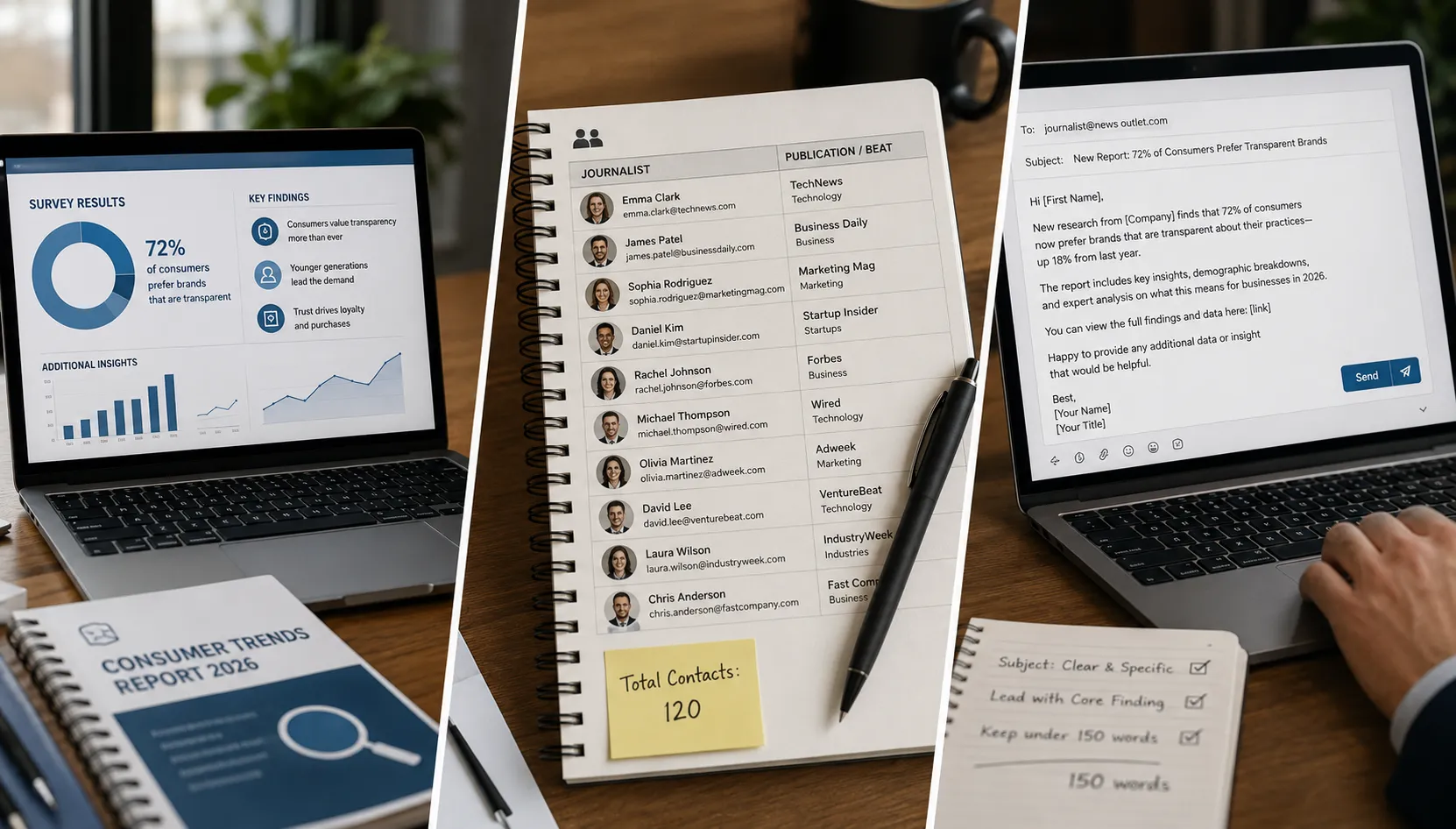
- A newsworthy asset built specifically to attract press coverage
- A journalist relations list of 75–150 targeted media contacts
- A media pitch under 150 words leading with the core finding
Why Paid Link Building Fails PR-Focused Brands in 2026
Google Identifies and Devalues Paid Placements
Google’s spam detection identifies paid guest post networks and devalues links from these sources automatically. Sites built purely to sell links lose editorial coverage value the moment they join a paid network. A backlink from a site with no genuine editorial standards carries zero brand credibility — and growing penalty risk for any communications strategy built around it.
Link Marketplaces Have No Editorial Standards
Over 41,000 websites openly accept paid guest posts. These sites publish content without editorial oversight, without genuine media relations, and without real audiences. Press coverage from these sources delivers no brand reputation value — only a link that Google increasingly ignores. Authentic public relations practice has always distinguished earned media from paid advertising; digital PR enforces that same distinction algorithmically.
Earned Media Outperforms Paid Placement on Every Metric
Genuine editorial coverage from a journalist who independently chose to cover your story delivers brand visibility, referral traffic, brand credibility, and a public trust signal that paid placements simply cannot replicate. A communications strategy built around earned media and professional media relations consistently outperforms transactional link buying across every measurable outcome — from domain authority to share of voice in your industry vertical.
How to Run a Digital PR Campaign: 4 Steps to Earned Media
Step 1 — Develop a Newsworthy Asset for Press Coverage
Journalists and editors need content their audience genuinely wants to read. Original research, proprietary industry data, and authoritative expert commentary earn press coverage because editors can build complete, well-sourced stories around credible findings. This is the same principle that has driven public relations strategy since the press release was invented — give the media something genuinely worth covering.
4 asset types with the strongest press coverage pickup rates:
- Original data studies — survey 500+ people, publish findings with clear statistics
- Industry reports — quarterly or annual research about your niche
- Free tools — calculators and checkers that solve real audience problems
- Expert opinion — specific, data-backed commentary on breaking news stories
Step 2 — Build a Targeted Journalist Relations List
Identify journalists, editors, and correspondents who specifically cover your topic — not your broad industry. A reporter with a track record covering public relations, communications strategy, or brand reputation responds to media pitches far more readily than a general business journalist with no specialist focus.
Muck Rack, BuzzSumo, and LinkedIn identify the right media contacts efficiently. Building genuine journalist relations — understanding each reporter’s beat, tone, and recent coverage — is what separates professional PR outreach from mass email blasting. A focused media relations list of 75 targeted reporters consistently delivers stronger press coverage results than 500 irrelevant contacts.
Step 3 — Send a Media Pitch That Earns Press Coverage
Your media pitch receives 3 seconds of editorial attention. Lead with the most compelling data point. Follow with why it matters to their readership today. Close with an offer of full data access, expert commentary, or a direct interview — the same offer a skilled PR professional has always extended to a journalist building a story.
Media pitch structure that secures editorial coverage:
- Sentence 1: Most compelling finding from your research
- Sentence 2: Why their audience needs this information now
- Sentence 3: Offer of data, expert quotes, or interview access
- Sentence 4: One-line brand credibility statement
Step 4 — Track Editorial Coverage and Recover Unlinked Mentions
Monitor brand mentions and press coverage across all publications weekly. Every unlinked brand mention is a confirmed media placement opportunity. One follow-up email converts 30–40% of unlinked mentions into editorial backlinks — making mention recovery one of the highest-ROI activities in any public relations programme. PR professionals managing ongoing media relations treat unlinked mention recovery as a standard part of post-campaign reporting.
7 Earned Media Tactics That Secure High-Authority Press Coverage
- Original Research Studies
Publishing original research is the cornerstone tactic of modern public relations strategy. It generates 3–8x more editorial coverage than opinion content because journalists need credible, citable data to support their stories. When your study provides that data, every journalist who covers the findings names your brand as the primary source — earning editorial backlinks naturally through genuine press coverage and cementing your organisation’s authority in the public discourse around your industry.
A survey of 1,000 marketing professionals on AI adoption earns editorial coverage from VentureBeat, Marketing Week, and Search Engine Journal — each linking to the original research as an authoritative source.
- Expert Commentary and Journalist Relations
Journalists and editors actively seek expert commentary to strengthen editorial credibility and meet source diversity requirements. Platforms including HARO (Help a Reporter Out), Qwoted, and SourceBottle distribute journalist requests daily — connecting PR professionals and brand spokespeople with reporters already writing relevant stories. Responding with sharp, specific expert commentary earns brand mentions and editorial backlinks with no cold media outreach required. This is reactive media relations at its most efficient.
- Newsjacking for Reactive Press Coverage
Newsjacking — the PR practice of inserting brand commentary into breaking news cycles — secures press coverage by delivering expert opinion on major stories within 24–48 hours. When a significant industry event, regulatory change, or brand reputation crisis breaks, journalists need credible expert sources fast. A communications strategy that includes reactive PR protocols positions your brand as the go-to media contact in your sector, building long-term journalist relations through consistent availability and relevance.
- Localised Industry Studies
City-specific or niche data studies attract national publications and local media simultaneously, maximising the reach of a single PR asset. A study on “The Most Competitive PR Markets in 2026” or “Industries With the Strongest Earned Media Results” gives journalists pre-packaged story angles with shareable, regionally relevant data — reducing their research burden significantly and increasing the probability of editorial placement across multiple media outlets.
- Reactive Expert Commentary
Monitor industry news daily through Google Alerts and BuzzSumo. When a trend, policy change, or market event connects to your communications strategy expertise, pitch a reaction piece to relevant journalists within hours. In public relations practice, speed is a competitive advantage — journalists file stories the same day on major news events, and the first credible expert source to reach their inbox secures the press coverage and the byline.
- Original Surveys for Earned Media Campaigns
A 500-person survey costs $200–$500 to run through Pollfish or Typeform and forms the data backbone of a full earned media campaign. The resulting statistics become quotable across dozens of editorial articles over months, with each citation earning a natural backlink and reinforcing brand authority. One well-constructed survey — designed with PR-led story angles in mind — generates earned media placements and press coverage across a 6–12 month window from a single research investment.
- Free Tools That Earn Passive Editorial Backlinks
A free tool earns editorial press coverage for years after launch because it continues to serve genuine audience utility. Calculators and interactive checkers attract ongoing media placement because journalists recommend useful resources in roundup articles, editorial guides, and industry reports. A PR campaign cost calculator or media outreach planning tool earns editorial backlinks every time a journalist covers industry resources — with zero additional outreach effort from the communications team.
Digital PR vs Traditional Link Building
| Factor | Digital PR | Traditional Link Building |
| Approach | Public relations strategy | Transactional link buying |
| Link Type | Editorial, earned media | Paid placement |
| Press Coverage | Full article + brand mention | None |
| Brand Reputation | Grows with real audiences | Zero impact |
| Brand Credibility | Third-party editorial validation | None |
| Media Relations | Active journalist relationships | None |
| Communications Value | Full PR campaign | Link only |
| Google Risk | Zero — genuine editorial | Medium to high |
| Cost Per Placement | $200–$800 earned | $50–$500 paid |
| Longevity | Permanent editorial link | Removed or devalued |
What Google Recognises as Genuine Editorial Coverage
Google’s search quality documentation identifies 4 signals that separate genuine press coverage from paid link schemes — signals that align directly with the editorial standards public relations professionals have always upheld:
- Publication has real topical authority A public relations or marketing publication covering a PR campaign study signals genuine editorial relevance and journalistic intent. A generic blog covering every topic signals a link farm operating without editorial standards or a defined readership.
- Link placed through editorial independence A journalist or editor independently chose to include the link — no payment, no exchange, no request. Pure earned media resulting from genuine media relations and newsworthy content: the foundational output of professional public relations practice.
- Natural anchor text chosen by the journalist Brand name, publication URL, or contextually relevant phrase selected by the journalist editorially — not keyword-optimised anchor text engineered by an SEO practitioner. Natural language linking is the hallmark of genuine press coverage.
- Linking page has real audience traffic Genuine publications with engaged, real readerships drive referral traffic alongside editorial backlinks. Sites built purely for link sales have no audience, no editorial credibility, no media relations history, and no brand reputation value — all signals Google’s quality systems assess.
Real Results From Digital PR Campaigns
A well-executed digital PR campaign — built on sound public relations strategy, strong media relations, and genuinely newsworthy content — delivers 8–25 editorial placements per campaign from publications with real audiences and authentic editorial standards.
Typical 3-month outcomes running 2 campaigns:
- 15–40 earned media placements from credible publications
- 20–60% growth in referring domains
- Brand reputation uplift across 2–4 industry verticals
- Organic visibility improvement of 15–35% over 6 months
- Sustained press coverage driving referral traffic long after publication
Results vary by niche, asset quality, and journalist relations list accuracy. Finance, health, and legal niches average 8–12 placements per campaign. Technology, marketing, and lifestyle niches average 15–25 placements because journalists in these verticals actively seek fresh data, brand commentary, and expert sources through ongoing media relations activity.
How Much Does Digital PR Link Building Cost?
Digital PR link building costs $1,500–$15,000 per campaign depending on target publications, communications strategy complexity, the depth of media relations activity required, and overall campaign deliverables.
Starter — $1,500–$3,000 per campaign
- 1 content asset built for press coverage
- Media outreach to 50–75 journalist contacts
- 5–10 earned editorial placements
- Best for businesses building initial brand credibility and journalist relations
Growth — $3,000–$7,000 per campaign
- 2–3 content assets across formats
- Media outreach to 100–200 journalist contacts
- 10–20 earned editorial placements from established publications
- Best for brands targeting significant brand reputation and share of voice growth
Enterprise — $7,000–$15,000 per campaign
- Full communications strategy and campaign management
- Media outreach to 200+ journalists across national and trade publications
- 20–40 earned editorial placements from Tier 1 media
- Best for brands managing reputation management and public affairs at national scale
Digital PR Link Building by Industry
Every industry earns editorial press coverage differently — the media pitch angle, journalist relations pool, brand messaging framework, and content asset type all vary by sector. Effective public relations strategy starts with understanding the specific media landscape your brand operates within.
Technology and SaaS Technology journalists and tech desk editors respond to product usage data, AI adoption research, and software comparison studies. Media pitches leading with specific percentage findings earn the strongest press coverage. Target publications: TechCrunch, VentureBeat, SaaStr.
Ecommerce and Retail Consumer behaviour surveys, seasonal shopping data, and retail trend reports earn consistent editorial coverage from commerce and business journalists. Target publications: Retail Gazette, Business Insider, Glossy. Data on shifting purchase behaviour reliably earns national media placement.
Finance and Fintech Salary research, cost-of-living data, and investment trend surveys earn mainstream media pickup from financial journalists and economics correspondents. Finance desks need fresh data constantly for ongoing economic press coverage. Target publications: Forbes, MarketWatch, Bloomberg.
Legal Services Research on legal technology adoption, regulatory change impacts, and access-to-justice data earns specialist legal media coverage. Expert commentary from qualified spokespeople on new legislation earns reactive press coverage fast. Target publications: Law.com, Above the Law, Legal Cheek.
Healthcare and Wellness Patient survey data, mental health statistics, and wellness trend reports earn strong health media placements from specialist health journalists and medical correspondents. Healthcare editors prioritise data from credible sources with transparent research methodology. Target publications: Healthline, Medical News Today, WebMD.
5 Mistakes That Destroy PR Campaigns
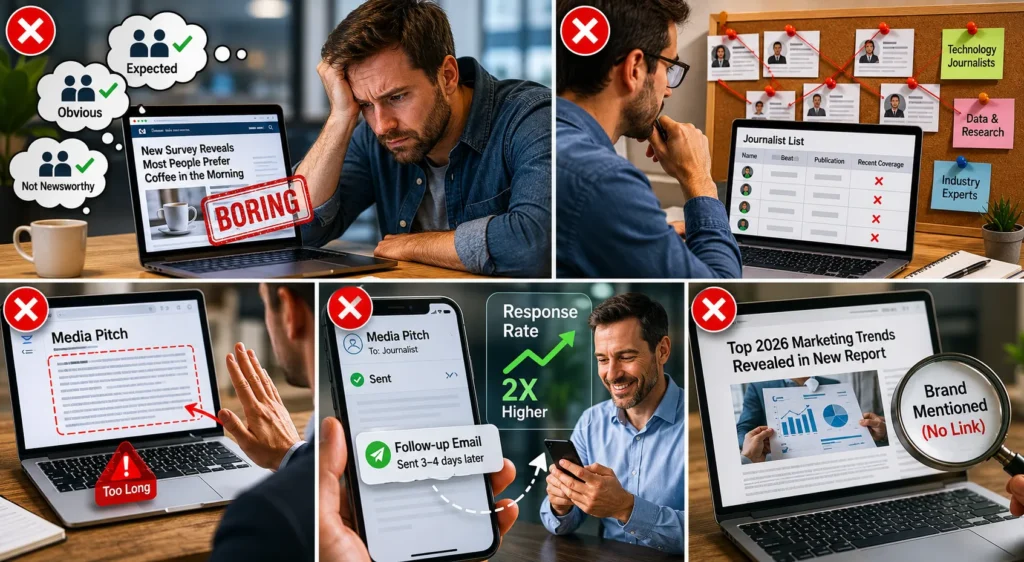
- Pitching data nobody finds surprising A survey confirming widely-held assumptions earns zero press coverage. Effective earned media campaigns lead with counterintuitive, specific, or timely findings that journalists cannot source elsewhere — the same standard any experienced public relations professional applies when assessing story viability.
- Building the wrong journalist relations list Pitching a public relations data study to a general business reporter with no communications beat wastes every media outreach contact in your list. Spend 60% of total campaign preparation researching and building an accurate journalist relations list — sorted by beat, publication, and recent coverage — before sending a single media pitch.
- Sending a media pitch longer than 150 words Journalists and editors operating under deadline pressure skip long pitches immediately. The core finding goes in sentence 1. Concise, specific media pitches earn press coverage. Long, brand-forward pitches earn nothing — a principle every PR professional learns early in their media relations practice.
- Stopping after one outreach send One well-timed follow-up email doubles editorial response rates. Most earned media placements result from follow-up contact rather than the initial media pitch. Send one concise, value-adding follow-up after 3–4 days — standard practice in professional media relations management.
- Ignoring unlinked brand mentions Every journalist who covers your campaign without linking back represents a confirmed editorial backlink opportunity that requires only a single polite email to convert. Monitor brand mentions and press coverage weekly through Google Alerts and Muck Rack, and recover every unlinked mention systematically as part of your ongoing public relations reporting process.
Conclusion
Digital PR link building is no longer an optional upgrade to a communications strategy — it is the strategy. Brands that invest in original research, genuine journalist relations, and earned media outreach build something paid link schemes fundamentally cannot: a public reputation that compounds over time.
Every editorial placement adds domain authority, referral traffic, and brand credibility that persists long after the campaign ends. Every relationship built with a journalist through professional media relations opens the door to future coverage at zero marginal cost. Every data study published under your brand’s name advances your position as a credible, authoritative voice in your industry’s public conversation.
Public relations has always been about earning trust — with journalists, with editors, with audiences, and with the public. Digital PR applies that same discipline to the online media landscape, where trust signals translate directly into search visibility, share of voice, and long-term brand reputation.
The brands dominating organic search in 2026 are not the ones that spent the most on links — they are the ones that gave journalists something genuinely worth covering. That is the entire game. Start there.