A backlink builder does one job: get other websites to link back to yours without triggering a Google penalty. The right choice depends on your budget, your risk tolerance, and how fast you need results. It has nothing to do with which provider has the flashiest homepage.
Some teams need a hands-off agency running outreach quietly in the background. Others want a marketplace where they pick every site themselves. RhinoRank, Stan Ventures, Web Push, and Adsy each take a different approach, and the gaps between them show up fast once you check pricing, vetting standards, and what happens when a link disappears. Here’s what a backlink builder actually does, which metrics are worth tracking, and what separates a safe investment from a wasted one.
What Is a Backlink Builder?
A backlink builder is a service, specialist, or tool that secures hyperlinks from other websites to yours, using outreach and content placement instead of automated spam techniques. Google treats each earned link as a vote of confidence, and votes from relevant, authoritative sites carry more weight. Get enough of the right ones, and your rankings for target keywords tend to climb.
One dog breeder’s site in Stan Ventures’ portfolio grew from 82 keywords in the top 3 positions to over 200 after a sustained link campaign. That kind of jump takes months of disciplined placement work, not a quick fix.
The term covers three distinct setups: full-service agencies that run outreach on your behalf, self-serve marketplaces where you browse and buy individual placements, and standalone software tools that help you find prospects yourself. Pick the wrong category and you’ll waste time and budget before you even get to comparing vendors, so match the model to your team’s bandwidth first.
How Does a Backlink Builder Get You Links?
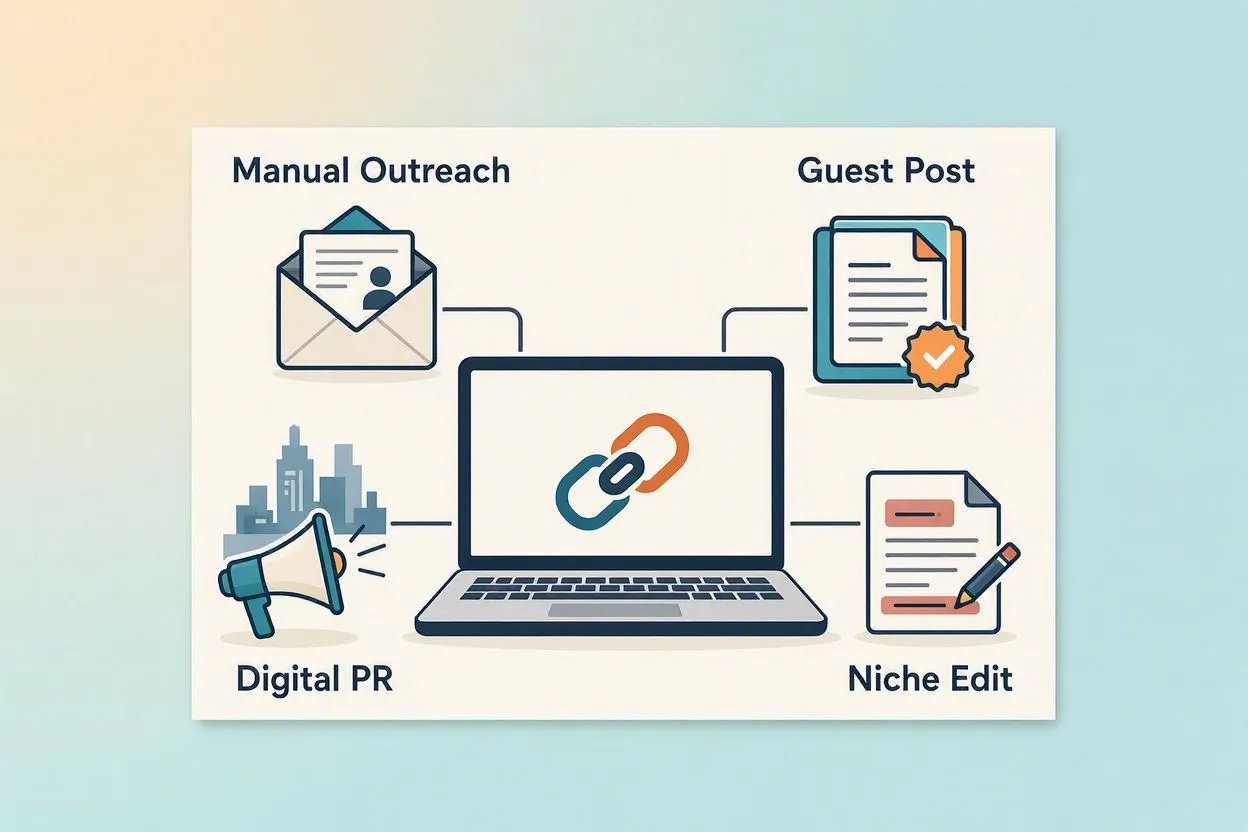
There are four core methods a backlink builder relies on: manual outreach, guest posting, niche edits, and digital PR.
Manual outreach means a real person emails site owners, pitches a placement, and negotiates terms. It’s slower than automation, but it avoids the spam filters and manual penalties tied to bulk techniques. Guest posting places a brand-new article on a host site, giving you full control over the surrounding content and anchor text. Niche edits insert your link into an article that’s already published and indexed, which speeds up the ranking impact since the page already carries authority.
Digital PR earns links through journalist outreach, data studies, or newsworthy campaigns. It tends to land the hardest placements to get, including sites like Forbes or industry trade publications.
If your budget only stretches to one method, niche edits usually deliver the fastest visible movement. Google doesn’t need to crawl and build trust in a brand-new page first.
What Metrics Should a Backlink Builder Track?
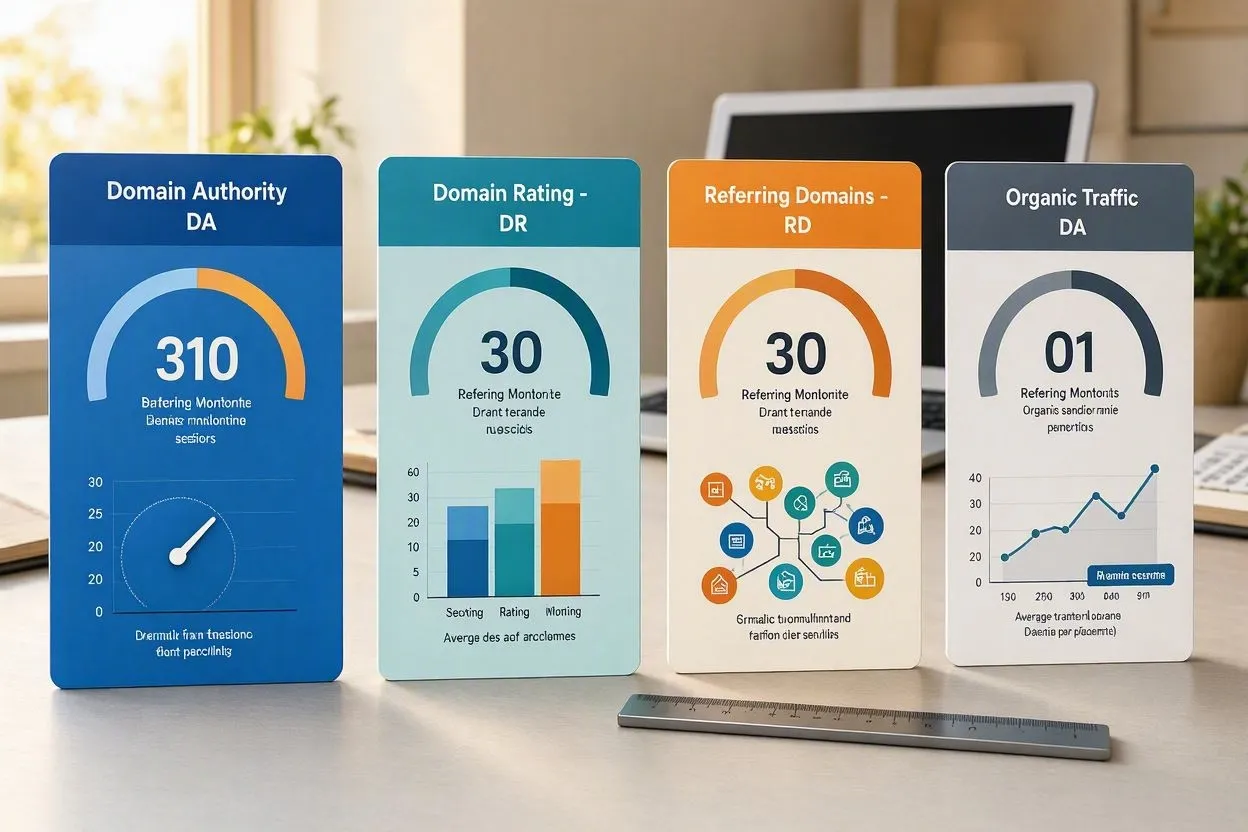
Domain Authority (DA), Domain Rating (DR), Referring Domains (RD), and real organic traffic on every placement site.
DA and DR are third-party authority scores from Moz and Ahrefs. Neither is an official Google metric, though both correlate loosely with ranking potential. RD counts the number of unique domains linking to a site, and some agencies argue it predicts strength better than a single authority score does.
Traffic matters just as much. A site with a DR of 60 but zero real visitors is often a private blog network (PBN) or an expired domain propped up purely to sell links. RhinoRank publishes RD thresholds of 500-plus and 1,000-plus for its top-tier links, while Web Push sets a DR 30-plus floor paired with verified traffic data. Ask any vendor which metrics they’ll guarantee in writing. Vague promises around “high authority” with no numbers attached usually mean the sites haven’t been vetted at all.
Is Buying Backlinks From a Builder Safe?
Yes, when the process relies on manual, editorial placements on real sites with organic traffic.
Risk climbs fast if a provider leans on PBNs, link farms, or bulk automated outreach. Google’s spam policies explicitly target manipulative link schemes, and getting caught can tank your rankings for months. Web Push reports rejecting 9 out of 10 sites it prospects, which is a rough but useful proxy for how selective a vendor actually is.
A safer signal to check is link permanence. Stan Ventures offers a lifetime placement guarantee, replacing any link that gets removed or switched to nofollow within a set window, usually six to twelve months. Before paying anyone, ask for a sample list of live client placements and verify a handful of those URLs yourself in a free tool like Ahrefs’ backlink checker or Google Search Console.
How Much Does a Backlink Builder Cost?
Typically $55 to $500 per link, depending on placement type and target site authority.
RhinoRank lists curated links and visual links starting at $55, with guest posts starting at $70. Adsy’s live marketplace shows per-post pricing in the $75 to $90 range on mid-authority sites, scaling up sharply for sites pulling tens of millions of monthly visitors. Agency-run campaigns from providers like Stan Ventures don’t publish flat rates. They quote based on chosen metrics such as DA, DR, or Semrush Authority Score (AS), so two clients targeting different quality tiers can end up paying wildly different amounts for the same link count.
If a quote comes in under $30 per link with no traffic verification attached, treat that as a red flag, not a bargain. Sustainable link acquisition costs more than that to execute manually. It just does.
What Should You Look for Before Hiring a Backlink Builder?
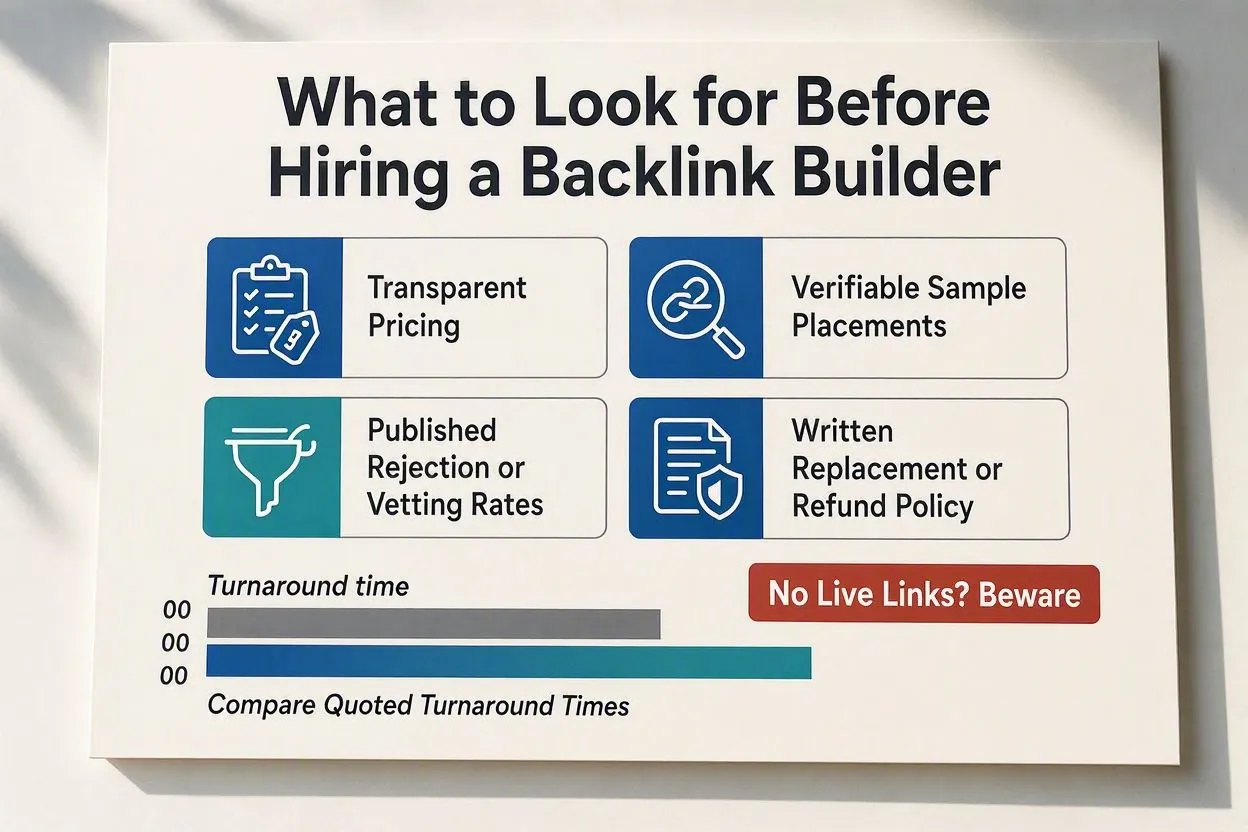
Before you hire anyone, look for four things: transparent pricing, published rejection or vetting rates, sample placements you can verify independently, and a written replacement or refund policy.
A vendor who won’t share even one live, verifiable link from a past client is asking for blind trust, and no reputable outreach team should need that. Compare quoted turnaround times too. Most legitimate providers cite 2 to 4 weeks for first links to go live and 2 to 3 months before ranking movement shows up in Google Search Console.
Watch for country-specific targeting if your audience sits in the United States, since a provider’s core network in the United Kingdom or elsewhere may not carry the same relevance signal for US-focused queries. Get a written scope of work naming exact deliverables, anchor text guidelines, and reporting cadence before any payment changes hands.